What Does a Receptionist Really Cost? The Full 2026 Breakdown
The short answer: what a receptionist costs per year
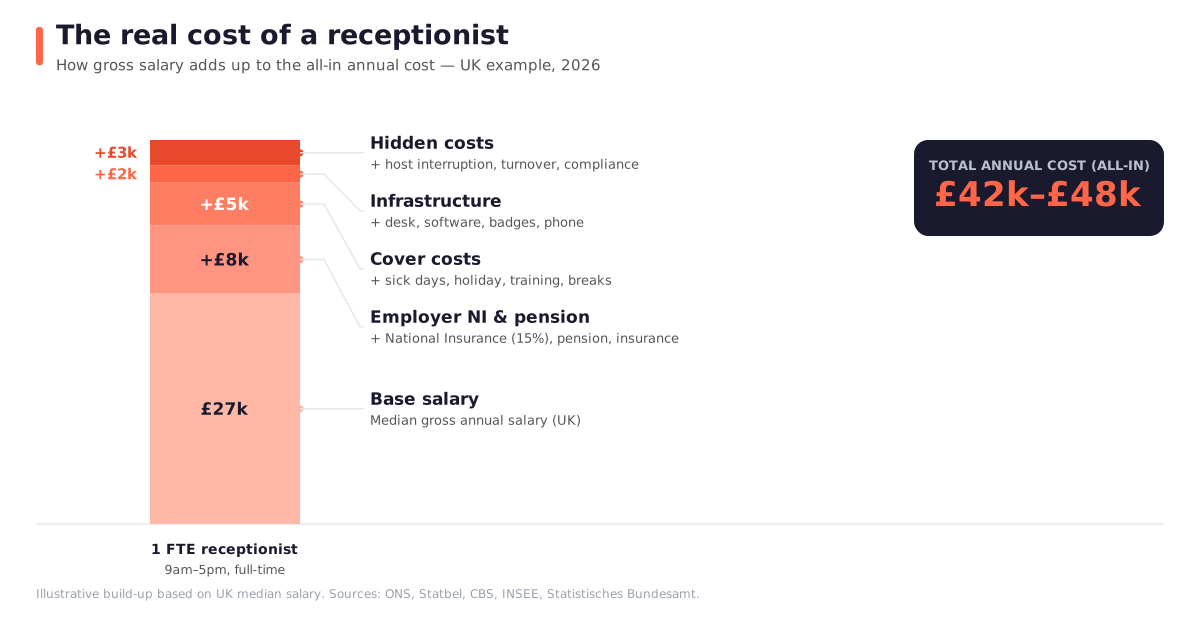
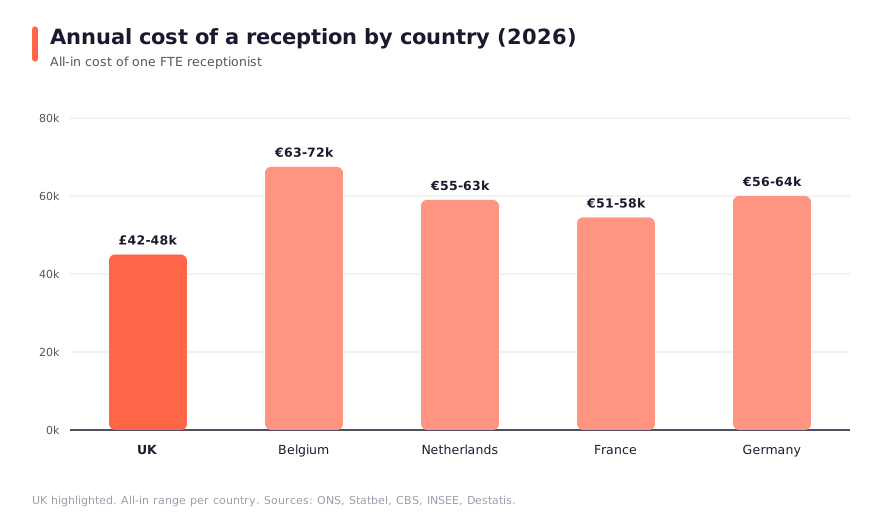
The total cost of running an office reception in 2026 ranges from £42,000 to £48,000 per year for a single full-time receptionist in a corporate front-of-house role in the UK, or €51,000–€72,000 across Western Europe, depending on the country, benefits package and hours of coverage. Salary is the largest component, but most analyses miss the hidden costs: employer National Insurance and pension (which add 20–55% on top of gross salary), holiday and sick-cover gaps, training and turnover, infrastructure, and the productivity cost of reception tasks that spill over onto other employees. A digital reception, by contrast, costs £3,000–£9,000 per year all-in once installed.
This guide breaks every one of those line items down by country, shows the maths behind the totals, and gives you a payback framework you can apply to your own office. Bringme appears throughout as one example, but the figures below describe the category, not a single product. Want the concept first? Here's what a digital reception actually is.
What does a reception actually cost? Line-by-line breakdown
"Reception cost" is almost never just a salary. A staffed front desk carries five distinct cost layers, and the gap between the headline salary and the true all-in figure is where most budget surprises live.
Direct salary costs by country (2026 data)
- United Kingdom: £22,000–£32,000 (ONS; Reed)
- Belgium: €32,000–€40,000 (Statbel; Robert Half)
- Netherlands: €28,000–€38,000 (CBS; Glassdoor NL)
- France: €24,000–€32,000 (INSEE; Page Personnel)
Germany: €30,000–€42,000 (Statistisches Bundesamt)
Employer National Insurance, pension and on-costs (the +20 to 55% multiplier)
- United Kingdom: salary × 1.20–1.35 — employer NI at 15% on earnings above £5,000 (from April 2025), workplace pension (min. 3%) and employer's liability insurance.
- Belgium: salary × 1.40–1.50 — social security ~27%, holiday pay, year-end bonus, meal vouchers, group insurance.
- Netherlands: salary × 1.30–1.40 — contributions ~20–25%, 8% holiday allowance, pension.
- France: salary × 1.42–1.55 — employer charges ~42%.
Germany: salary × 1.20–1.30 — contributions ~21%.
Cover costs (holidays, sick days, breaks, training)
- Sick-day cover: typically 5–10 days per year with no one at the desk.
- Training and onboarding: £1,000–£2,500 per new hire, plus 6–8 weeks of ramp-up.
- Lunch breaks: one hour a day is ~12.5% of capacity away from the desk.
Holiday gaps: paid leave sits in the on-costs, but covering the empty desk is a separate cost.
Infrastructure costs (desk, software, badge printer, phone, visitor book)
- Reception desk furniture: £2,500–£7,000 (amortised).
- Visitor management software, where used: £1,000–£4,000/year.
- Badge printer plus supplies: £400–£1,000/year.
- Phone system: £200–£500/year per line.
Paper visitor books plus the UK GDPR requirements for visitor data: a hidden labour cost rather than a hard invoice.
Hidden costs everyone forgets
- Host interruption: announcing visitors pulls hosts away from work — an estimated 15–30 minutes per host, per day.
- Missed deliveries: parcels and couriers arriving outside desk hours, returns, courier abandonment.
- Out-of-hours gaps: cleaners, contractors and late-arriving execs with no one to receive them.
- Compliance overhead: UK GDPR visitor-data handling and ISO 27001 audit support.
Turnover: median tenure is roughly 18 months; replacement cost runs ~30% of salary.
Total annual cost: 5-country comparison
How much does a digital reception cost?
A digital reception replaces the front-desk flow (visitor check-in, host notification, badge printing, parcel handling) with software, a parcel locker and a check-in kiosk. During check-in, it also has visitors automatically read and digitally sign the documents you require: an NDA, your privacy policy (UK GDPR) and the building's health-and-safety rules. Every agreement is logged and stored, ready for audits. Costs fall into four categories.
Software licence cost
Typically £120–£650/month, depending on the number of sites, integrations and modules such as digital visitor registration.
Hardware cost
A one-off £2,500–£7,000 for the kiosk, badge printer and any building-system integrations (access control, intercom, lifts).
Implementation and onboarding
A one-off £1,500–£4,500, scaling with complexity: the number of entrances, languages and the type of integration with your access control.
Annual running costs
All-in, most offices run a digital reception for £3,000–£9,000/year once installed. First-year cost including hardware and setup is usually £4,000–£12,000.
Staffed vs hybrid vs fully unstaffed reception
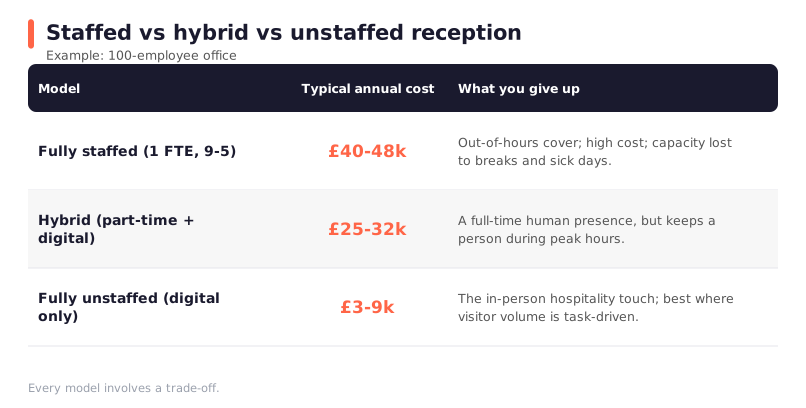
For the qualitative side of this trade-off, see from a classic reception desk to a digital reception and how a digital reception benefits your company.
How virtual reception differs from a digital reception
In the UK the terms get muddled. A "virtual receptionist" usually means a remote phone-answering service — it handles calls but cannot greet a visitor at the door, print a badge, or manage a parcel. A digital reception automates the physical front desk: check-in, host notification, badge issuance, document signing and parcel handling, 24/7. Many organisations run both: a phone service for calls and a digital reception for the lobby. When you compare costs, make sure you're comparing like for like — this page covers the physical front-desk function, not call answering.
How fast does a digital reception pay back?
The payback formula
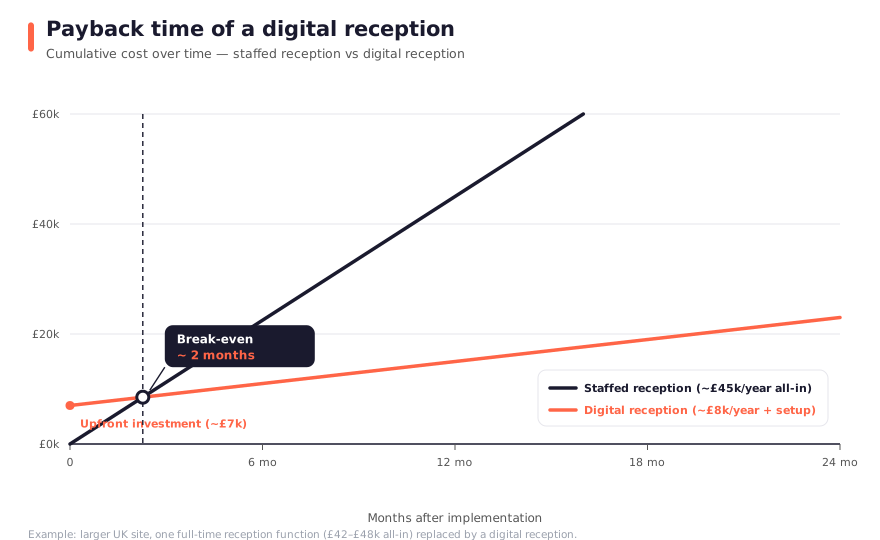
Payback (months) = Total digital reception cost ÷ (Monthly staffed cost − Monthly digital cost)
Most offices land in a 6–18 month window. The two levers are the cost of the receptionist being replaced and how much of the reception workload is genuinely automatable.
Worked example: larger UK site
A larger UK site often runs two FTEs, or a front desk plus a security/visitor role. A full-time reception function there easily costs £42,000–£48,000 all-in per year. Replacing it with a multi-entrance digital setup (£15,000 in the first year, £8,000/year after) saves roughly £2,800–£3,200 a month, or about £37,000 a year. The upfront investment is therefore recovered in around two to three months. Out-of-hours coverage and multilingual check-in are bonuses an FTE never offered.
Hidden savings nobody talks about
- Host time recovered: 15–30 min/day/host of avoided interruptions, multiplied across employees.
- Compliance automated: UK GDPR-compliant visitor logs and audit trails generated automatically.
- Real estate: a smaller lobby footprint when the staffed desk is no longer the anchor.
- Out-of-hours capability: 24/7 visitor and parcel handling becomes a genuine productivity unlock.
Real customer cost reduction: Phished case study
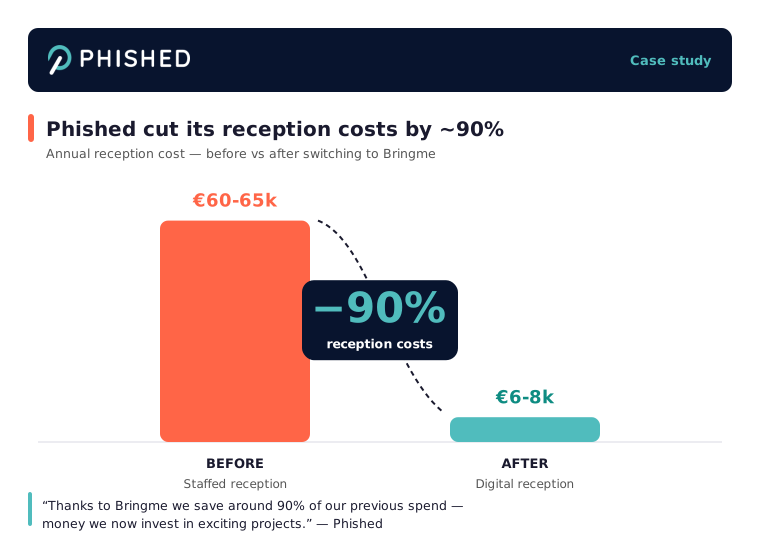
Phished reduced its reception costs by around 90% after switching to Bringme.
- Before: a staffed front desk costing roughly €60,000–€65,000 per year all-in.
- After: a digital reception running at roughly €6,000–€8,000 per year all-in.
- What they cut: the full-time desk salary and on-costs, badge/visitor-book infrastructure, and host-interruption overhead.
- What they kept: a professional, branded welcome, full visitor registration, host notifications and parcel handling — now available out of hours too.
FAQs
How much does a receptionist cost per year?
All-in, a single full-time receptionist costs £42,000–£48,000 per year for a corporate front-of-house role in the UK, or €51,000–€72,000 across Belgium, the Netherlands, Germany and France in 2026. This includes salary, employer National Insurance and pension, benefits, holiday and sick cover, infrastructure and hidden costs such as host productivity loss.
Why is the all-in cost so much higher than the gross salary?
Because employer National Insurance and pension, holiday pay, sick cover, infrastructure, training and turnover add roughly 20–55% on top of gross salary. A £24,000 gross salary in the UK reaches £42,000–£48,000 all-in for a corporate front-of-house role once everything is included.
How much does a digital reception cost?
A digital reception typically costs £120–£650/month for the software licence, plus a one-off hardware cost of £2,500–£7,000. Total first-year cost is usually £4,000–£12,000, dropping to £3,000–£9,000 per year afterwards.
How fast does a digital reception pay back?
Most offices see payback in 6–18 months. The exact period depends on the cost of the receptionist being replaced and the volume of reception tasks being automated. Smaller offices (5–20 employees) pay back faster because reception cost is a larger share of overhead.
Does a digital reception always save money?
No. Very small offices (under 10 employees) with very low visitor volume may not have a receptionist to replace. Organisations where the receptionist serves a hospitality function (luxury B2C, premium client experience) may want to keep the human touch. Most mid-sized offices, however, see significant savings.
What about hybrid setups — part-time receptionist plus digital?
A hybrid setup typically costs £25,000–£32,000 per year (a part-time receptionist plus a digital reception). This works well for offices that need a human present during peak hours but want 24/7 coverage and parcel handling outside those hours.
What does a receptionist actually earn in the UK?
Median salaries in 2026: UK £22k–£32k, Belgium €32–40k, Netherlands €28–38k, France €24–32k, Germany €30–42k. Add roughly 20–55% for employer on-costs, benefits and overhead to reach the all-in cost.
What is the most overlooked cost of a staffed reception?
Host productivity loss. When a receptionist interrupts an employee to announce a visitor, that employee loses an average of 15–30 minutes to context switching. Across a 100-person office with 20 daily visitors, that's several hours of lost productivity per day — a hidden cost of £18,000–£35,000 per year. For the security angle, see our 13 measures for a cyber-secure reception.